
Review the current site, search footprint, content, audience, and technical constraints.
Service
Web design built to grow your business.
Strategy-led, responsive websites with clear structure, strong performance, and practical custom build options when a full CMS is not the right fit.

A better website starts with a clearer business story.
A strong business website helps visitors understand the offer, decide whether it fits, and take the next useful step. We design responsive websites around those decisions, then connect the visual system to content, development, search, and measurement.
Every engagement is shaped by the audience, content, operational needs, and existing technology. The goal is not a fashionable layer over old problems; it is a site that communicates clearly and can keep improving.
For many service businesses, that means a custom HTML website with fewer moving parts, cleaner code, and a more deliberate page structure. When WordPress or another CMS is the better fit, we will say so. The platform should serve the business, not the other way around.
Turn the findings into stronger pages, cleaner systems, and campaign-ready assets.
Use analytics and real behavior to keep refining traffic, trust, and conversion.
Design Detail
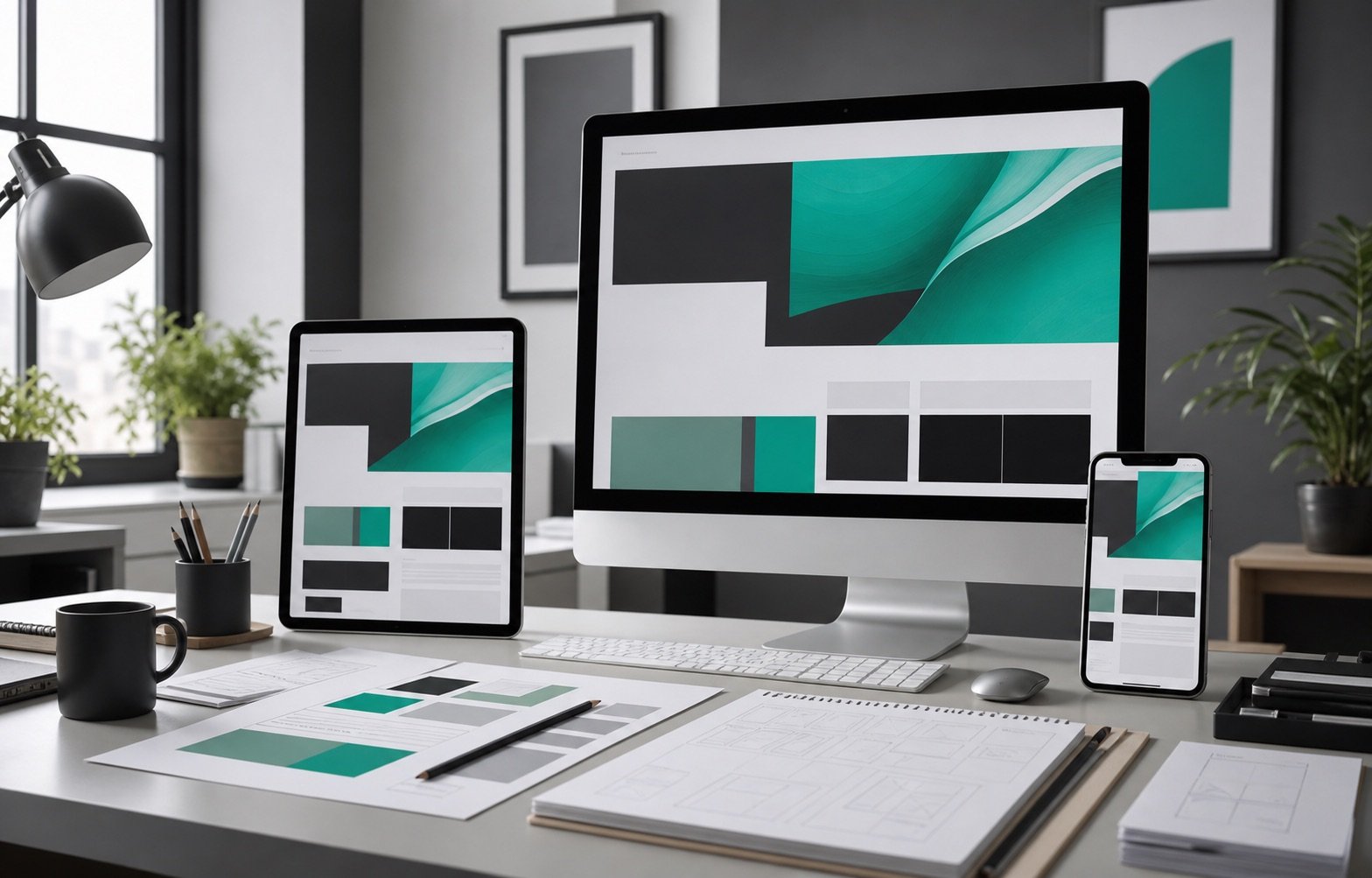
Responsive structure is part of the design, not an afterthought.
The page system needs to hold up across mobile, desktop, long copy, changing calls to action, search needs, and the custom features the business may add later.
What we can build together.
Focused services, practical decisions, and a site your team can keep using after launch.
Website strategy and information architecture
We map audiences, services, proof, conversion paths, and content relationships before visual design begins. Navigation and page structure are tested against real customer questions rather than internal terminology alone.
Responsive user experience design
Layouts are designed for phones, tablets, laptops, large displays, zoom, long text, and changing content. Stable components and purposeful interaction reduce friction across different devices and input methods.
Accessible design
Color contrast, keyboard access, focus visibility, heading structure, labels, target sizes, motion preferences, and error handling are considered throughout the project. When a formal conformance target is required, it should be defined in the project scope and tested accordingly.
Content and conversion planning
Headlines, supporting copy, calls to action, forms, proof, and next steps are organized around the information a visitor needs. Conversion work focuses on qualified actions and user trust, not manipulative patterns.
Why we often recommend custom HTML websites.
Many business websites do not need the overhead of a full content management system. A custom HTML website can be faster, cleaner, easier to secure, and easier to maintain when the content does not require constant in-house editing.
Greenhouse Design Group can still work with WordPress when it is the right fit, especially for teams that need frequent publishing, complex editor workflows, or familiar CMS tools. For many service businesses, though, a lightweight custom build provides stronger performance, clearer structure, fewer plugin dependencies, and a website that is easier to improve over time.
Capabilities and platform details.
Review practical service details, responsibilities, and planning considerations for this work.
Visual systems and brand expression
Typography, color, imagery, spacing, and reusable components create a recognizable experience without making every page look identical. Existing brands can be extended, refined, or translated into a practical digital design system.
Performance-aware design
Image choices, fonts, animation, embeds, and component behavior affect loading, responsiveness, and visual stability. Designs are reviewed with current Core Web Vitals and real device constraints in mind.
Custom HTML, WordPress, and content management
We recommend a content system based on publishing workflow, integrations, ownership, security, and maintenance needs. WordPress, hosted platforms, headless systems, and custom HTML builds are options, not automatic answers. If your team does not need frequent CMS editing, a lightweight custom build may reduce maintenance and improve performance.
Testing and launch
Priority templates are reviewed across supported browsers and viewports, with checks for links, forms, accessibility, content overflow, metadata, redirects, and analytics requirements. Launch planning includes ownership, backups, domain changes, and post-launch verification.
Ongoing improvement
After launch, search data, user behavior, sales feedback, and content performance can identify the next valuable change. This creates a healthier improvement cycle than waiting years for another redesign.
Website design questions.
Clear expectations make a better design project from the first conversation.
How much does a website or redesign cost?
Cost depends on page count, content needs, design depth, existing-site issues, integrations, ecommerce, accessibility goals, and launch requirements. We review the current situation before recommending a practical scope.
Will the site work on mobile and support SEO?
Modern website work should include responsive layouts, readable structure, metadata, page speed considerations, and clear content paths. Ongoing SEO strategy can be added when the goal is sustained search visibility.
Can you build custom HTML instead of WordPress?
Yes. Many business websites are a strong fit for custom HTML or static website development because they need speed, clean structure, reliable forms, and fewer plugin dependencies more than a large editing system. WordPress remains an option when the editing workflow calls for it.
Can you help with content, accessibility, and ownership?
Design work can include content planning, copy refinement, image direction, accessibility-minded structure, and handoff planning. Domain, hosting, CMS, licensing, and account access should be discussed early so ownership is clear.
Ready to make the website work harder?
Tell us what is working, what is not, and what the business needs next.