
Clarify the business goal, visitor journey, information needs, privacy requirements, and what success should look like.
Custom Builds
Custom website features built around the way your business works.
Dashboards, website features connected to AI APIs, cookie consent systems, promotional modals, redirects, lead capture workflows, and custom modules that make your site more useful.

When standard pages are not enough, custom features help the website support the business.
Some website needs do not fit neatly into a standard page template. A business may need a reporting dashboard, an AI API connection for a website feature, a consent flow, a promotional module, a redirect manager, a lead routing workflow, or a modal that changes by page, audience, campaign, or consent status.
Greenhouse Design Group plans and builds custom website functionality with the same priorities used in our website design and development services: clear user experience, reliable structure, search-aware content, privacy-minded setup, and practical launch support. The result should feel like a natural part of the website.
Shape the interface, content, workflow, and feature plan before moving into the full build.
Build, test, connect measurement where appropriate, and support the first real-world usage cycle.
Custom Systems
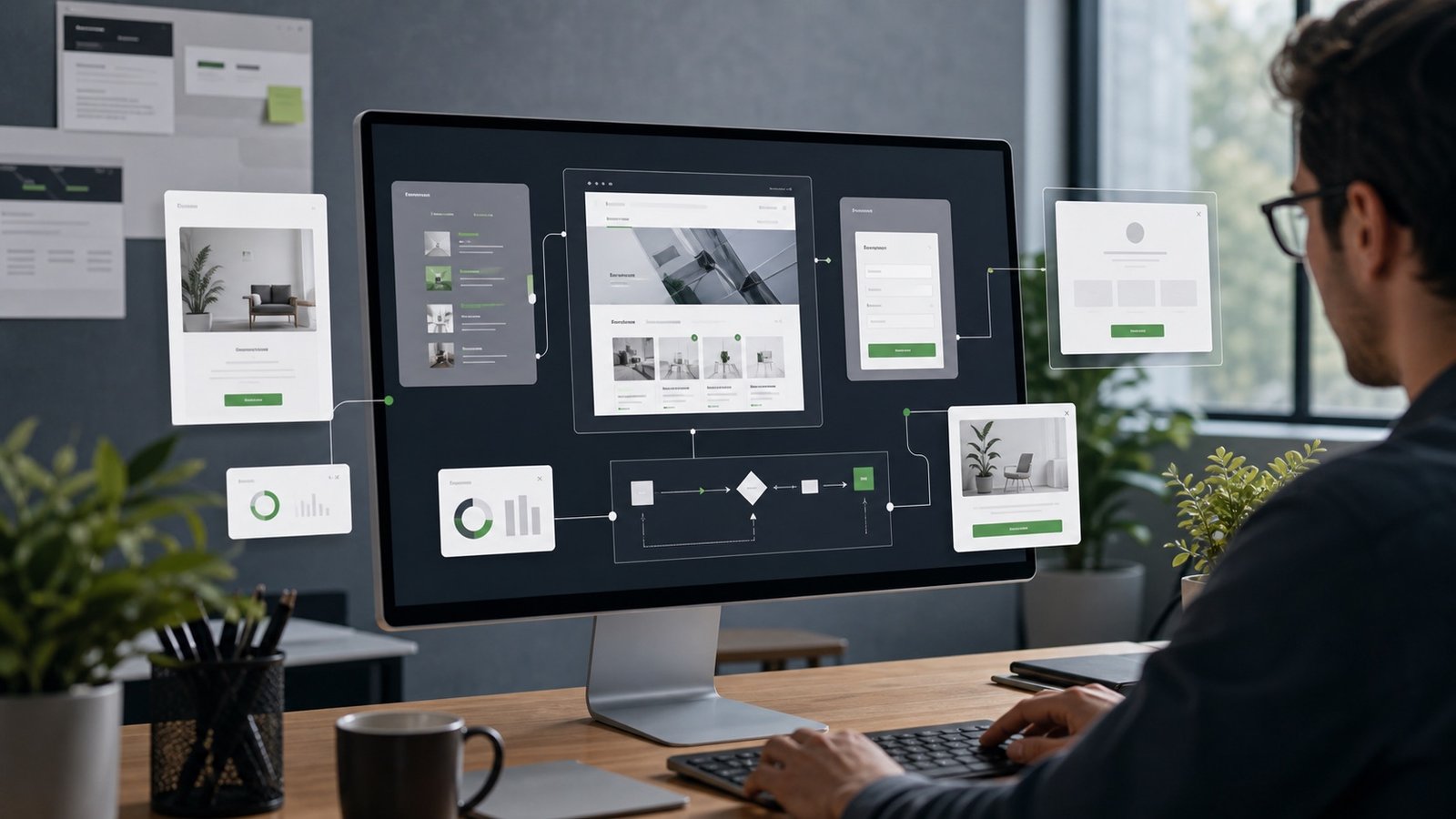
Useful modules extend the website without turning every page into a full application.
Dashboards, consent tools, promotions, forms, redirects, and API-connected features can be planned around a specific business need and measured after launch.
Portfolio Examples
See the custom work in context.
The examples are now connected to the portfolio, so visitors can move from service capabilities into real case studies with strategy, design, build, integrations, and product context.
View full portfolio
LOOKlauncher
Historical website reconstruction and case study for a planned beauty and style application, preserving the original marketing site before adding portfolio context.
MeetEmLi and Between Us
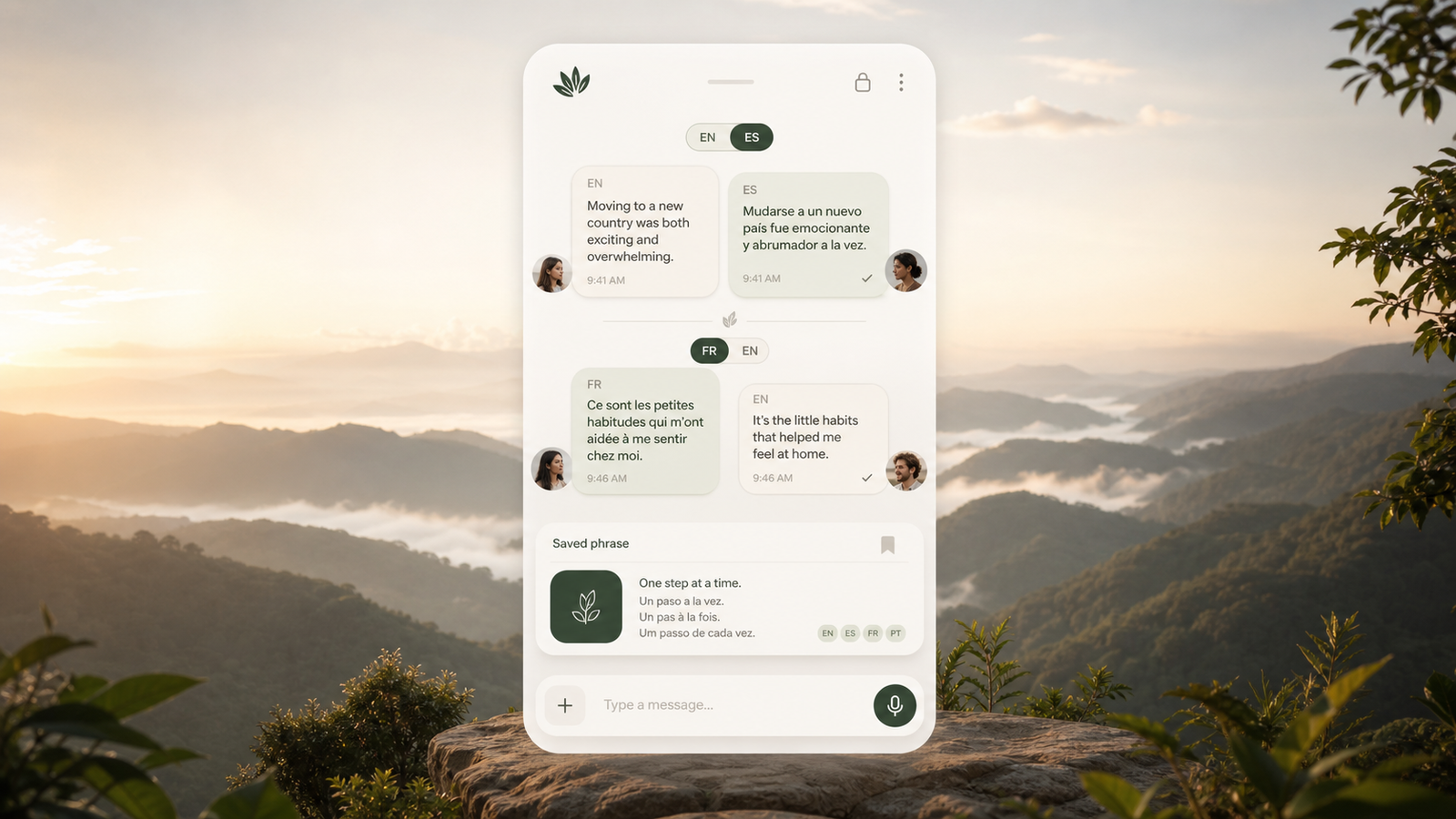
Bilingual product experience connecting a public waitlist site with private translated rooms, AI-assisted conversation support, and mobile-first app flows.
Front Desk API Tool
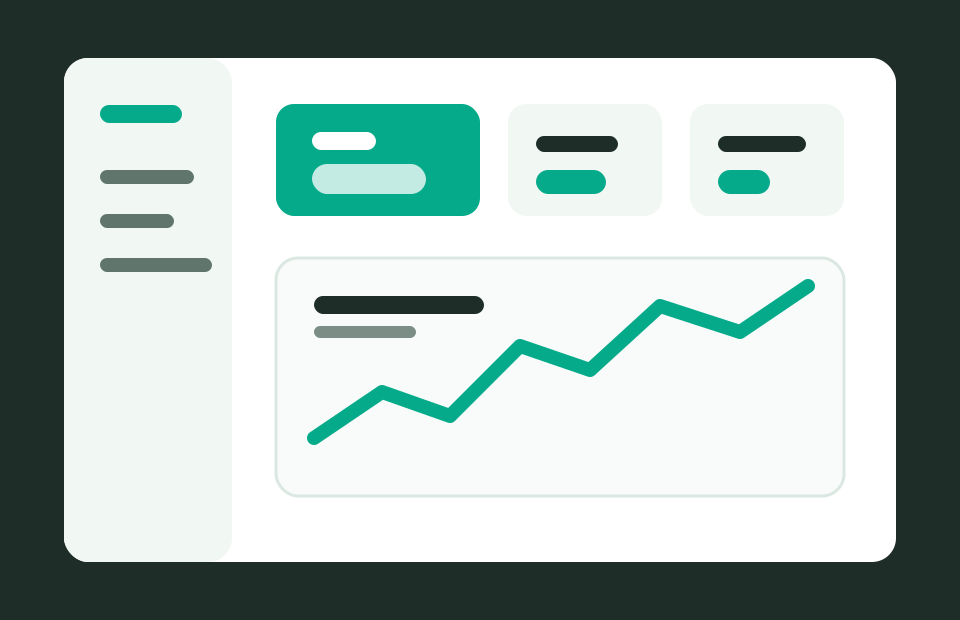
An unbranded operations dashboard showing how a website can use a third-party scheduling system API to support staff workflows, lookup speed, and controlled actions.
Sessions Cycle
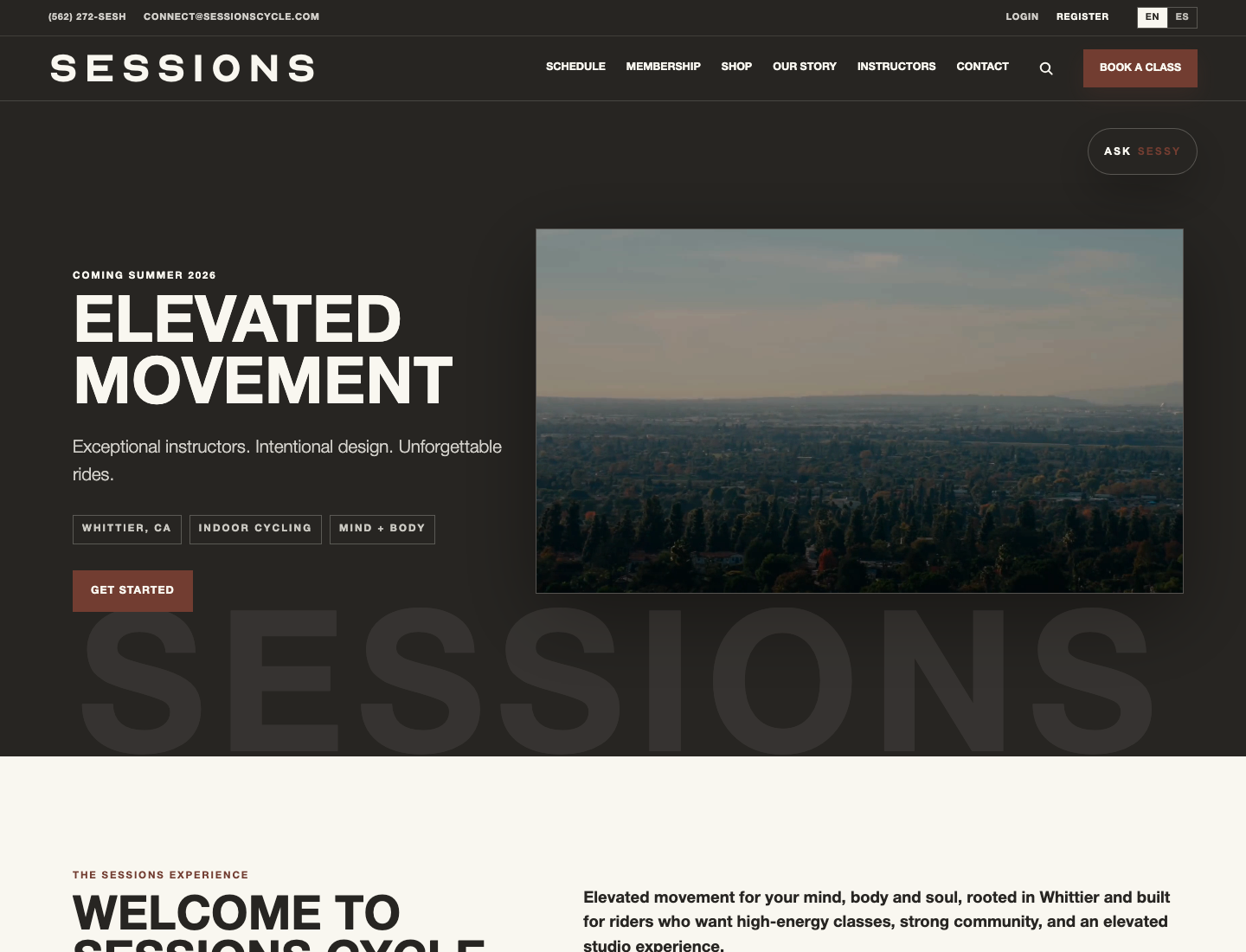
A bilingual studio website structure for class discovery, instructor context, schedule paths, memberships, policies, and local launch marketing.
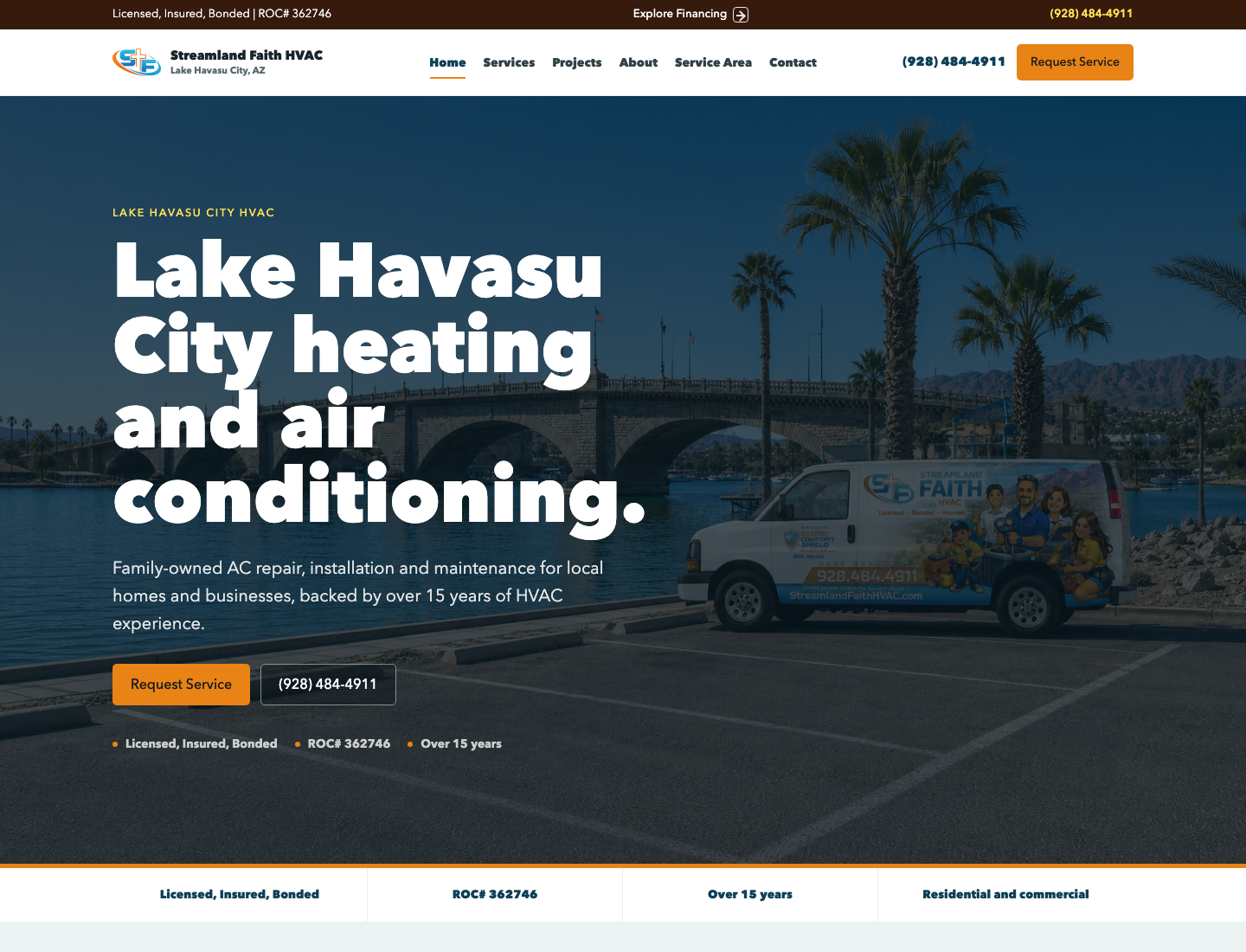
Streamland Faith Mechanical
A local service website focused on urgent HVAC needs, service clarity, field imagery, trust signals, and direct contact paths for homeowners and property managers.
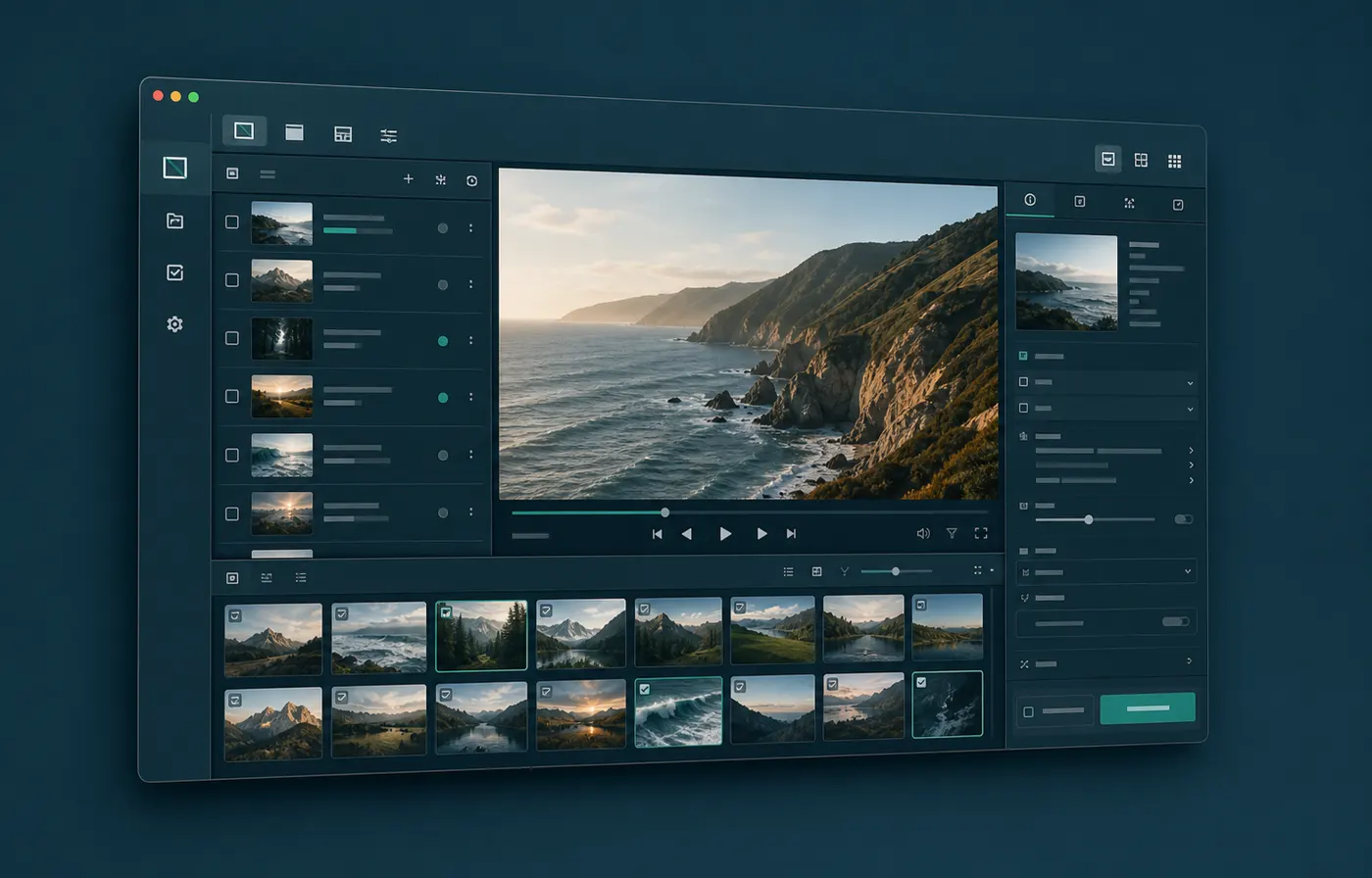
ClearFrame
A local-first media utility case study covering workflow design, file handling, processing boundaries, and a clean interface for organizing video review tasks.
Common custom modules still available.
These are the practical website features behind many custom builds, from lightweight enhancements to deeper operational tools.
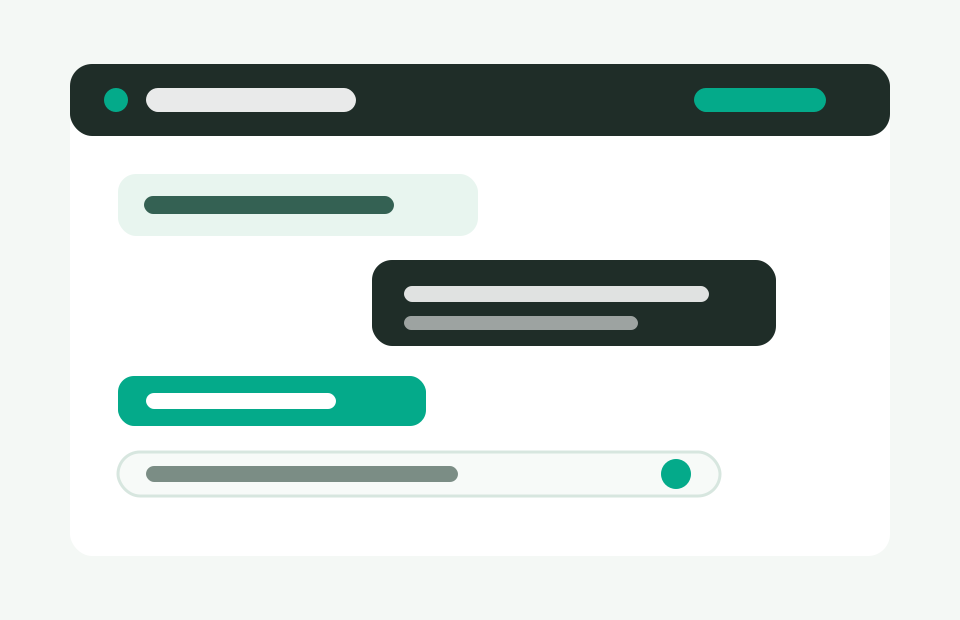
AI API integrations
Connect a website feature to AI services through APIs when the visitor experience calls for guided answers, intake help, summaries, or recommendations.
Business dashboards
Bring form activity, feature usage, content performance, lead trends, campaign results, or business signals into one controlled view.
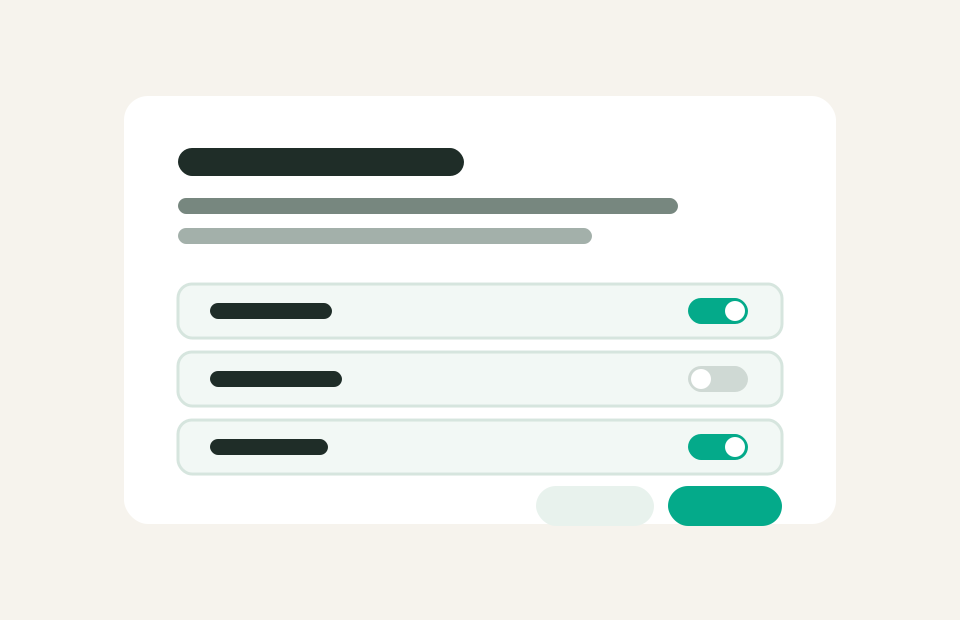
Cookie consent modules
Separate required functionality from analytics, preferences, statistics, and marketing tools so scripts load only after the right choice.
Promotional modals and banners
Support seasonal offers, service announcements, lead magnets, event reminders, and campaign-specific calls to action without interrupting every visitor.
Redirect and landing page modules
Preserve SEO value during site changes, campaign launches, URL cleanup, and content retirement with clear destination logic.
Lead capture and form workflows
Categorize inquiries, record consent, route leads by service type, reduce spam, and connect forms to follow-up systems.
What custom website features can include.
Custom features are scoped around the business goal, the visitor journey, the information needed, and the website systems already in place.
Strategy and requirements
We clarify the problem, audience, visitor roles, important scenarios, privacy concerns, content sources, integrations, reporting needs, and launch requirements. This keeps the feature tied to a real business outcome.
Interface and content design
Custom modules still need thoughtful UX. We plan labels, helpful messages, accessibility, mobile behavior, and surrounding page copy so the feature is easy for visitors and staff to understand.
Database and integration planning
Some modules need a database, API connection, CRM, email platform, analytics event, or admin workflow. We define what information is needed, where it goes, who can access it, and how the experience should behave if a connected service is unavailable.
SEO, analytics, and measurement
Custom features should support the website strategy instead of hiding important content from search engines or breaking measurement. We consider crawlable pages, redirects, structured data, event tracking, consent-aware analytics, and clear reporting.
Security and privacy review
Access control, bot protection, form validation, data minimization, consent records, and retention expectations should be part of the plan when a feature collects or displays sensitive information.
Documentation and support
Custom website development should not leave the business guessing after launch. We can document settings, admin steps, reporting events, update expectations, and common support paths.
Good custom work feels specific, but not overbuilt.
The strongest custom website features solve a repeated problem, improve a measurable workflow, or help visitors make a better decision. They do not need to be complicated to be valuable. A small consent-aware promotion, a clean redirect process, or a better form pipeline can be more useful than a large application that nobody maintains.
Before recommending a build, we look at whether the need can be solved with existing CMS features, a trusted service, a lightweight module, or a fully custom workflow. That decision affects budget, launch speed, maintenance, and long-term ownership.
Custom website development questions.
Useful answers depend on your site, hosting, CMS, data, and the level of control needed.
Can you add custom features to an existing website?
Often, yes. The first step is reviewing the current platform, hosting access, codebase, plugins, database, security constraints, and how the new feature needs to interact with existing pages or forms.
Can custom tools help with SEO?
They can when they make the site clearer, faster, easier to manage, and more measurable. Redirect systems, structured content tools, better landing page workflows, and search-aware modules can support SEO when implemented carefully.
Do you build one-off modules or ongoing systems?
Both are possible. Some projects are focused modules, such as a cookie consent banner or promotion modal. Others become ongoing systems, such as dashboards, lead management workflows, or website tools that need iteration after launch.
Need the website to do something more specific?
Share the workflow, the current site, and what is getting stuck. We will help define the most practical custom build.